
Hirschmann Sensor Interfaces: Retention and Wiring Checks
Hirschmann interfaces that support plug locking and secure internal terminals
A pressure sensor’s Hirschmann plug needs secure fastening, while internal terminals need to stay positioned and insulated from the metal housing. Rodee combines the locking nut, connection pins, metal substrate and insulating base to support external plug locking and address connection rigidity and sealing.
Retain the locking nut to support plug fastening
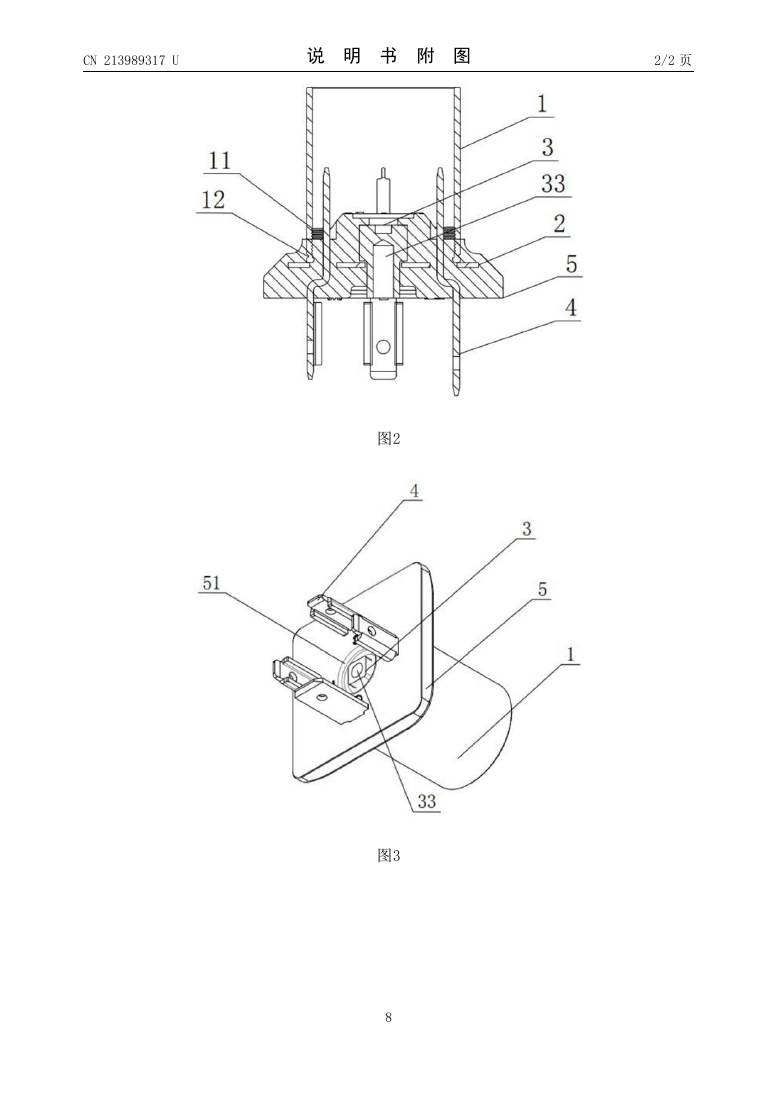
The plug’s locking bolt must engage correctly with the sensor’s internal nut. The metal substrate’s centre hole positions the locking nut before moulded material retains the assembly. Circular and square sections and retaining features help hold the nut in place.
The nut’s internal thread accepts the mating plug bolt, connecting external fastening with internal retention. This construction concerns the electrical plug. The media-side process thread is installed separately according to its pressure-connection requirements.
Retain and insulate the pins while strengthening the sealed joint
Bent pins pass through the metal substrate. Moulded material fills the surrounding space to retain the pins and separate them from metal parts. The substrate is welded to the housing before the insulating base surrounds the relevant regions, combining pin positioning, insulation and the housing joint.
Substrate through-holes, housing threads and V-grooves assist positioning and moulded retention, supporting rigidity, sealing reliability and IP68 protection. Actual protection depends on the model, mating plug, seals, cable entry and installation.
Assess the fully assembled connection for the installation
To retain a plug, provide its Hirschmann specification or full part number, pin diagram, cable dimensions and installation photographs, together with pressure range, medium, supply and output. Allow space for plug removal and maintenance.
After mating, complete locking and cable-entry sealing according to the sensor and plug instructions. Include vibration, washdown or temperature-change conditions and acceptance requirements when relevant so the configuration can be assessed. Use the actual product instructions for fastening.
Patent documents
Read the patent description and claims · View the published PDF · Download PDF
Patent record and certificate
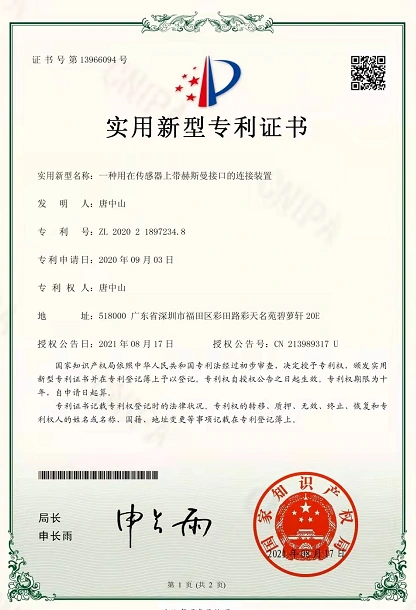
| Title on the certificate | 一种用在传感器上带赫斯曼接口的连接装置 |
|---|---|
| Patent type | Utility model |
| Patent number | ZL 2020 2 1897234.8 |
| Filing date | 2020-09-03 |
| Grant publication date | 2021-08-17 |
| Grant publication number | CN 213989317 U |
| Certificate number | 13966094 |
| Inventor named on the certificate | 唐中山 (Tang Zhongshan) |
| Patentee named on the certificate | 唐中山 (Tang Zhongshan) |
View the original certificate image
Integration questions
If the plug fits, why check cable dimensions and locking parts?
Mating, bolt locking and cable-entry sealing serve different purposes. The seal must suit the actual cable and the locking parts must fit the sensor so the complete connection can be assembled according to its instructions.
Related products and technical support
Review analogue- or digital-output transmitter documents and confirm the interface against the existing Hirschmann plug, cable and operating environment.
Contact Rodee Sensors for selection and technical documents · Back to the patent portfolio