
Metri-P Sensor Interfaces: Construction and Harness Matching
Metri-P one-piece terminals reduce secondary welding and strengthen the connection
A Metri-P sensor interface needs to match the plug while providing secure, insulated internal terminals. Rodee uses one-piece bent pins to reduce secondary welding of split terminals, then joins the housing, substrate and insulating base in a single moulding operation to address connection risks and strengthen the package.
Remove a terminal joining step and reduce its associated risks
Split pins require two sections to be welded before assembly, adding a terminal joint and assembly steps. Each of the three pins in this design is formed as one continuous bent piece, connecting the internal circuit to the external interface without secondary welding of those pin sections.
Continuous terminals help reduce short- and open-circuit risks associated with that welding step. Forming, positioning and packaging can also be coordinated to reduce repeated assembly. The one-piece construction concerns the pins; the metal housing and substrate still use their corresponding welded joint.
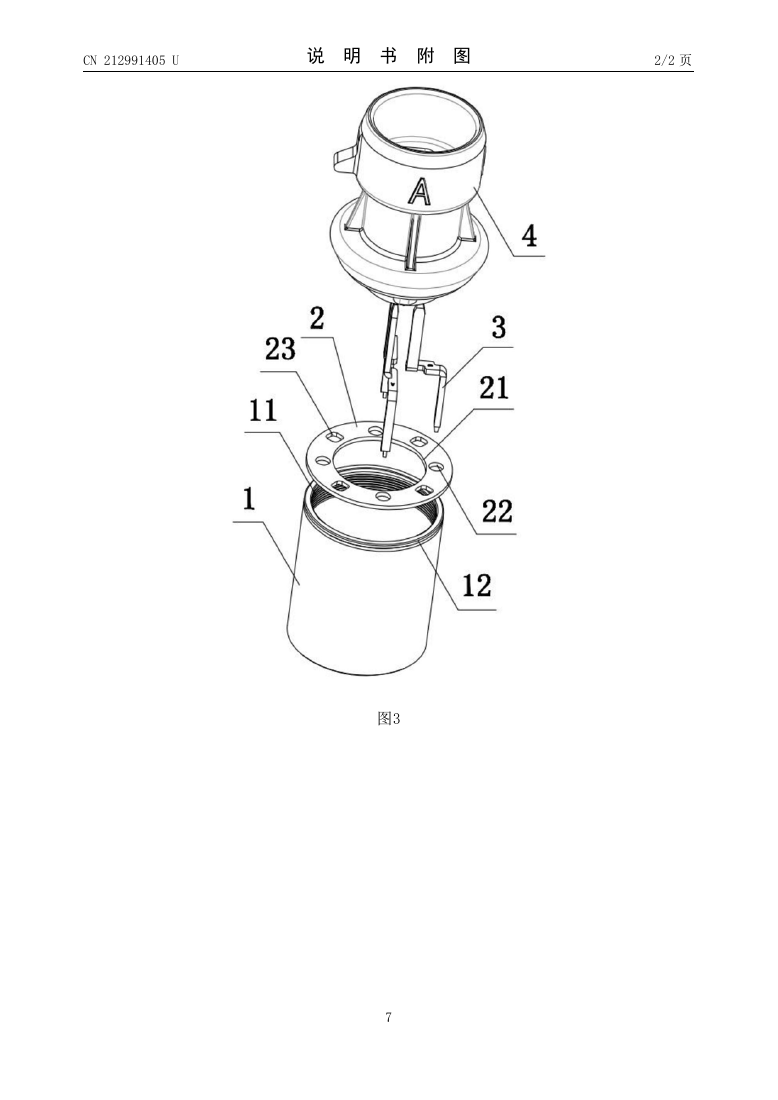
Retain and insulate the pins in one moulded package
After the metal housing and substrate are welded, the insulating base surrounds the upper housing, substrate and middle of the pins. Clearance holes leave space around the pins, while moulded material separates them from metal parts and holds them in position.
Housing threads, V-grooves and retaining features strengthen the metal-to-plastic joint, supporting connection rigidity, sealing reliability and IP68 protection. Actual protection depends on the selected model, mating plug, seals and installation.
Match pin assignments and routing space when retaining a Metri-P harness
The same three-pin layout does not establish the same power, ground and signal assignment. Provide the plug part number or clear photographs, pin diagram, supply and output information to check the connection with the controller. Pressure range, medium and process connection must also suit the equipment.
Allow space for plug removal, connector orientation and harness bends. A sample can be checked with the existing harness for correct mating, locking and signal acquisition, followed by configuration assessment against the actual temperature, vibration or cleaning requirements.
Patent documents
Read the patent description and claims · View the published PDF · Download PDF
Patent record and certificate
| Title on the certificate | 在传感器上应用Metri-P接口的连接装置 |
|---|---|
| Patent type | Utility model |
| Patent number | ZL 2020 2 1897208.5 |
| Filing date | 2020-09-03 |
| Grant publication date | 2021-04-16 |
| Grant publication number | CN 212991405 U |
| Certificate number | 12978030 |
| Inventor named on the certificate | 唐中山 (Tang Zhongshan) |
| Patentee named on the certificate | 唐中山 (Tang Zhongshan) |
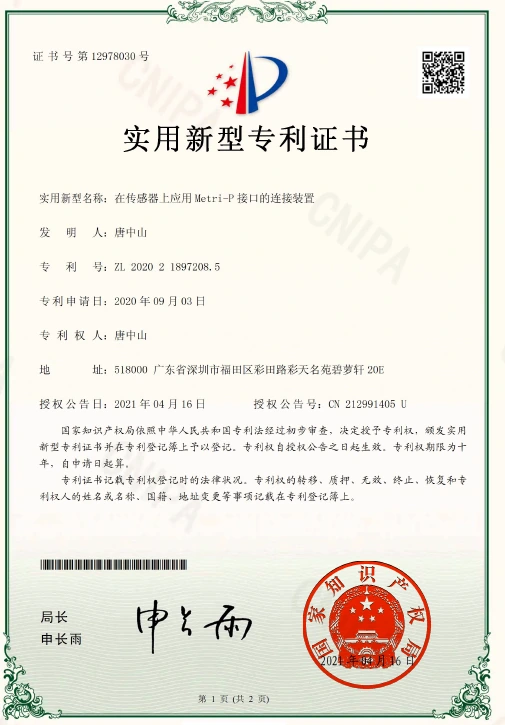
View the original certificate image
Integration questions
Can the original pin assignment be retained when two three-pin plugs look the same?
Compare power, ground and signal positions using the selected sensor and harness pin diagrams. Appearance and pin count do not establish the wiring arrangement; also confirm the supply and the output accepted by the controller.
Related products and technical support
Review transmitter range, supply and output documents, then provide the existing Metri-P plug and harness details to confirm a suitable configuration.
Contact Rodee Sensors for selection and technical documents · Back to the patent portfolio